Beat the Kingman High Desert Heat: Smart AC Survival Hacks to Stay Cool and Save Money
The high-desert reality in Kingman and Mohave County
Kingman sits at roughly 3,330 feet, where summer afternoons push past 105 degrees and rooftop surfaces run far hotter. Homes off Andy Devine Avenue and through Downtown Kingman take direct western sun from mid-afternoon to sunset, while open lots in Golden Valley see wind-driven dust that coats outdoor coils. In July and August, the combination of thin air, high radiant load, and long run time stresses every part of a cooling system, from the compressor and fan motors to contact points in the control circuit.
These conditions punish undersized equipment and neglected maintenance. Packaged rooftop units that are common along the Andy Devine corridor and parts of the White Cliffs and Hilltop areas face even higher heat than ground-set condensers. They sit in stagnant roof air that can exceed 140 degrees, which raises head pressure and amps. Split systems in Valle Vista and the Hualapai Mountain area face different issues, such as airflow loss from long duct runs and attic temperatures that spike well past 130 degrees on calm days.
This is why thoughtful AC strategy in Kingman is not a luxury. It is the difference between a system that coasts through the 4 to 5 hardest months and one that short-cycles, throws warm air from vents, and drives the electric bill higher than it should be.
Why local AC systems work harder than most people expect
Heat transfer does not care about ZIP codes. It responds to physics. Kingman’s air density is lower than sea level, so each cubic foot of air moving across the condenser coil carries slightly less heat away. That reduces the condenser’s effectiveness and forces the compressor to work harder to hit the same cooling output. This effect is mild in isolation, but it compounds with 110-degree ambient temperature and direct sun on outdoor units. A rooftop packaged unit on a black roof off Hualapai Mountain Road can see condensing temperatures climb fast if the condenser coil is even modestly fouled with dust.
Another local driver is solar load through west-facing glass. Homes near the Route 66 corridor and Locomotive Park see evening spikes as sun beats through until sunset. Without shading or reflective films, room temperature rises during peak utility pricing hours. That forces longer compressor cycles precisely when the grid is most stressed and the air conditioner’s efficiency is lowest.
Hard water also leaves its mark here. Condensate lines and drain pans scale up. In the Kingman area, mineral-rich water film can form inside the condensate system as dust-laden air passes the evaporator coil and moisture collects. Scale and dust bind, and the clogged condensate drain trips the float switch. Many “AC not cooling” calls around 86401 and 86409 in July turn out to be a clogged condensate line that locked out the system to prevent overflow into the air handler or attic insulation.
Elevation and air density reduce capacity more than a thermostat can fix
At Kingman’s elevation, condenser fan performance and compressor workload shift. Lower air density reduces mass flow across the condenser. A condenser coil that would reject a certain amount of heat at sea level is a few percent less effective here at the same fan speed. Throw in a late-June 109-degree afternoon and coil fins with a thin layer of dust, and discharge pressure climbs. The compressor runs hotter, the oil thins, and a weak run capacitor loses tolerance faster under that thermal stress. It is a measurable effect. Homeowners notice it as longer cycles, louder condenser operation, and a higher chance of tripping the breaker during the hottest hour of the day.
Rooftop packaged unit realities in Andy Devine and White Cliffs
Packaged units avoid the indoor coil attic space issue, but they collect heat from the roof. On July emergency ac repair afternoons, roof surface temperatures on dark membranes in Kingman test above 160 degrees. The air the condenser fan pulls across the coil is preheated by the roof, which cuts capacity and pushes compressor amps higher. This is why contactor pitting and capacitor failure show up earlier on many rooftop systems near the Andy Devine Avenue corridor and older homes in White Cliffs. Serviceable coil cleanliness and correct fan blade pitch matter more here than in milder markets.
Survival hacks that actually cut bills in Kingman’s climate
Avoid gimmicks. In Kingman’s high desert, the biggest energy savings come from reducing the system’s run time during the hottest window, balancing airflow so the evaporator coil runs at design delta, and preventing the common faults that trigger short cycling. The following points target the physics of local heat gain and what technicians see on real service calls.
Beat the west-facing load before 3 PM
Houses near Route 66, Locomotive Park, and along the Andy Devine corridor see daily afternoon gain from sun that hits walls, windows, and concrete driveways. Exterior shade at the right angle blocks infrared before it becomes indoor heat. Well-placed shade screens or reflective film on west windows can cut late-day indoor temperature rise by several degrees. That single change can shave one or two full compressor cycles during the 4 PM to 7 PM window, which shows up directly on the power bill in 86401 and 86409, especially during time-of-use rates.
Airflow is the foundation in Hilltop, Downtown, and New Kingman-Butler
Undersized return air is common in older Kingman housing stock. A central air handler with a constricted return starves the blower, drops evaporator coil temperature too far, and invites a frozen AC unit. The system then thaws, floods the drain pan, and short cycles all evening. Many homes in Hilltop and Downtown Kingman have a single return in a hallway that was never sized for today’s tighter envelope and added west-facing glass. A second return or a return upgrade often keeps the evaporator coil above the freezing threshold and stabilizes humidity and temperature. The blower motor then runs at lower static pressure, which improves longevity.
Thermostat strategy for high-mass desert construction
A programmable thermostat can drive energy savings here only when its schedule matches building mass and gain. In heavy-stucco or block homes near White Cliffs or Valle Vista, deep setbacks during the day force long recovery runs at 5 PM just as the sun hits hardest. A modest set-and-hold with a 2 to 3 degree afternoon rise often uses less energy overall than a 6 degree setback that demands full output and pushes supply air into warmer ducts at the hottest hour. Smart thermostat features help when paired with correct airflow and coil cleanliness. They do not make up for a dirty filter or a restricted return.
Dust and coil cleanliness in Golden Valley and along I-40
Outflow winds stack dust on condenser fins. Even a thin layer of dust and desert pollen increases thermal resistance. A clean condenser coil can drop head pressure by a noticeable margin compared to a fouled coil under the same conditions. That translates into lower compressor amps and cooler run windings. For homes near Golden Valley, Kingman Airport, and open lots along I-40, a coil that looks clean from five feet away can be dirty enough to cost 5 to 10 percent in real capacity on a 108-degree day.
Failure patterns technicians see every July and August
In Mohave County’s peak heat, systems fail in predictable ways. Knowing the pattern helps set expectations and informs better decisions about whether to repair now or plan for replacement before the next peak season. The list below matches common symptoms to the most frequent root causes seen on residential and light commercial calls in Kingman.
- AC not cooling during the first July heat wave: often a failed run capacitor or a refrigerant charge that drifted low over winter from a slow leak at a flare or service valve. Warm air from vents in late afternoon only: condenser coil fouling or high head pressure due to roof heat on packaged units, sometimes combined with return air restriction. AC short cycling during peak hours: contactor pitting causing intermittent power to the compressor, thermostat heat gain in sunlit hallways, or low airflow tripping freeze-thaw cycles. Strange AC noises from the outdoor unit: fan blade out of balance from dust deposits, blower motor bearings near failure, or compressor valves starting to leak under high head pressure. High electricity bill compared to last summer: reduced condenser performance from dust, evaporator coil fouling, ductwork leak at a plenum or boot, or a drifting TXV valve superheat target.
Capacitor and contactor stress in Kingman heat
Run capacitors inside condensing units age faster when ambient temperature and discharge temperature stay elevated for months. After ten or twelve summers in Kingman, many OEM capacitors test low under load even if they read close to spec off the bench. When the value slips, the compressor struggles to start and may trip thermal protection. Contactors pit from frequent cycling and heat. During typical July calls near Hilltop and Hualapai Mountain Park, technicians often replace a weak run capacitor and a pitted contactor together to prevent repeat failures within weeks.
A verified case from summer service routes in 86401 surprised many homeowners: a capacitor that measures within tolerance cold can still fail to start the compressor around 5 PM when case temperature climbs. The failure does not show in a simple garage test. It shows under real heat load. That is why reliable diagnosis includes under-load measurements and not just parts swapping.
Refrigerant charge accuracy with R-410A and the transition to R-454B
Most modern Kingman systems use Refrigerant R-410A. Correct subcooling and superheat targets are critical in 105 to 112 degree ambient temperatures. Small undercharge shows up as warm air from vents and low coil suction pressure that invites icing. Overcharge increases head pressure and pushes the compressor into a louder, hotter run that shortens life. With new equipment shipping on R-454B, charge procedures and recovery gear differ. R-22 is still found in legacy systems around Downtown Kingman and New Kingman-Butler, but parts and refrigerant costs make continued repair less attractive for owners who face repeated service calls each summer.
Blower and airflow issues hidden in ductwork
Blower motor failure often begins as intermittent thermal shutdowns. The motor restarts after cooling and the owner hears stop-start behavior. In Kingman attics that run past 130 degrees, marginal bearings and weak capacitors on PSC motors give up faster. High external static from undersized returns or dirty filters makes it worse. Ductwork leaks, especially at the supply plenum and boot connections in older White Cliffs and Hilltop homes, bleed cool air into the attic. That forces longer run time to reach setpoint, and homeowners see it as a creeping power bill. Sealing those joints with mastic and a proper boot-to-drywall seal can return a noticeable fraction of lost capacity, even before considering any equipment upgrade.
Commercial and mixed-use notes for Mohave County
Shops along Route 66 and the Andy Devine Avenue corridor run packaged units against a combination of door openings, kitchen loads, and direct western sun. Many use single-stage units not sized for afternoon spikes. A staged or variable-capacity rooftop unit reduces cycling and holds setpoint better on peak days. Buildings near Kingman Regional Medical Center with high internal loads benefit from demand-controlled ventilation, which reduces unnecessary outside air during peak heat and drops sensible load on the evaporator coil.
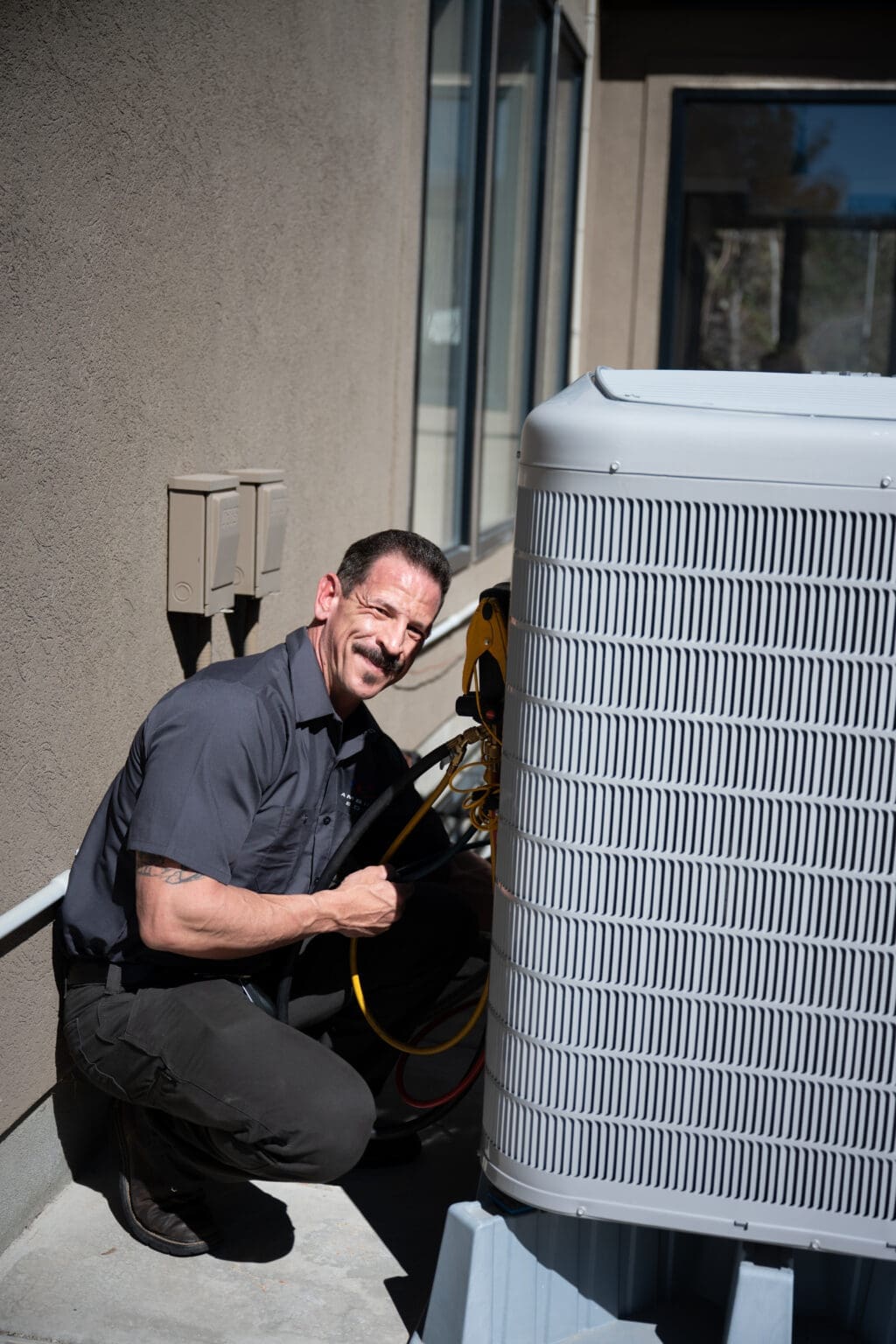
Evaporative coolers still sit on some older rooftops, especially in utility spaces. Evaporative cooling adds humidity that can push indoor comfort outside common expectations once monsoon moisture rolls in. Many business owners who swap to modern heat pumps with ductless mini split zoning for offices see improved comfort and lower maintenance. Mitsubishi Electric ductless systems, for example, control individual zones well in buildings with variable occupancy, and they keep working during partial facility shutdowns for maintenance elsewhere.
A locally specific, shareable finding that surprises many homeowners
Ambient Edge tracked midday rooftop temperatures on packaged units during the 2023 season in central Kingman. On a 108-degree afternoon, the air entering a sun-exposed rooftop condenser measured as high as 128 degrees due to roof heat soak, with localized air around the unit case at 135. Under that condition, measured compressor amps on several common 3-ton packaged units were 9 to 14 percent higher than the same models installed on shaded ground pads in the Locomotive Park area. That spread alone can turn a marginal run capacitor into a failure within weeks. Shade, clean coils, and correct fan blades on rooftop units are not cosmetic. They change real, measurable load on expensive parts.
Neighborhood-by-neighborhood realities in 86401, 86409, and 86413
Valle Vista homes often have long duct runs and attics with limited access. New Kingman-Butler has a mix of older electric furnaces with split-system air conditioners and a growing set of heat pumps. Downtown Kingman and Hilltop combine older returns, varied insulation, and skylights that drive daylight gain. White Cliffs faces sharp afternoon sun. Golden Valley is dust-prone and hard on outdoor coils and fan motors. Properties near Hualapai Mountain Park enjoy cooler evenings but still struggle on still, bright days when solar load exceeds elevation relief.
Ambient Edge service routes cover 86401, 86409, and 86413 daily. That includes homes near the Mohave Museum of History and Arts, the Mohave County Fairgrounds, Kingman Airport, and Route 66 attractions, plus neighborhoods moving south toward the Hualapai Mountain area and north toward Valle Vista. These routes see the full range of central air conditioners, split systems, packaged units, heat pumps, and ductless mini splits. The service data shape the survival tactics here because the problems recur in patterns that match microclimates and construction styles block by block.
What “saving money” looks like in technical terms
Savings do not come from turning the thermostat into a roller coaster. They come from reducing compressor head pressure, preventing freeze-thaw cycles, and keeping duct leakage and static pressure where the blower and the evaporator coil operate at design. Each degree of improved coil approach temperature at the condenser translates into real energy reduction. Sealing a return leak that pulls attic air reduces latent and sensible load and can shave minutes from each cycle. A blower that sees the correct external static consumes fewer watts and runs cooler, which keeps bearings and windings healthy.
Small changes scale. Correcting a chronically dirty air filter in 86409, sealing a supply boot in Hilltop, and shading a west window near Locomotive Park will not feel dramatic alone. Together, they drop run time during that punishing 4 PM to 7 PM window that drives both discomfort and the bill. Kingman’s grid and climate punish inefficiency more than milder markets do. That is why this approach works here.
Equipment choices that hold up in Mohave County
When a system reaches the point where air conditioning repair is frequent, brand and configuration matter. Trane and Lennox split systems with variable-speed compressors maintain supply air temperature more steadily across wide ambient swings. Carrier and Goodman packaged units with correct airflow and clean coils deliver reliable service on rooftops along Andy Devine, provided that coil care stays current. Rheem and York offer sturdy options for tight attic installations with air handlers that fit existing platforms. For ductless zoning, Mitsubishi Electric and Daikin heat pumps perform well across Kingman’s summer and mild winter range.
Regardless of brand, a Manual J heat gain calculation and ductwork assessment are non-negotiable for Kingman homes. A rule-of-thumb ton-per-square-foot estimate leaves many homes near Route 66 and Hualapai Mountain Road under-cooled on the hottest afternoons. SEER2 ratings help predict seasonal performance, but duct leakage, return sizing, and west-facing glass drive lived results. A correctly sized heat pump with a clean, balanced duct system outperforms a higher-SEER unit connected to a leaky, undersized return every time.
What technicians prioritize on summer calls across Kingman
Diagnostics focus on facts. Airflow measurement confirms external static pressure and flags return restrictions. Refrigerant gauges and temperature clamps confirm superheat and subcooling against manufacturer targets for R-410A systems, with attention to high ambient corrections. Capacitance testing under load on run capacitors filters out parts that pass a bench test but fail hot. Inspecting the contactor and pulling a voltage drop across the line catches weak points that turn into nuisance trips at 5 PM. In dusty areas like Golden Valley and near the Kingman Airport, condenser coil fin condition is checked from the inside out, not just rinsed from the exterior.
For rooftop packaged units on older roofs, technicians often measure discharge air temperature rise around the unit case. That metric, combined with nameplate data and real-time amps, points to how much the roof heat sink is costing in capacity and component life. Documenting those numbers helps homeowners decide if shading, a light-colored roof coating near the unit, or relocating to a ground pad is worth it during the next replacement cycle.
Repair now or plan for replacement
Not every system should be repaired. If a compressor on a 15-year-old R-22 system fails in 86401, the replacement cost of the compressor and the refrigerant often exceeds the value of moving to a modern R-410A or R-454B system with a true SEER2 improvement and a warranty that covers the next decade. On the other hand, a split system with a weak blower motor capacitor and a dirty condenser coil in 86409 usually benefits from straightforward air conditioning repair and maintenance that returns the unit to spec the same day.
Owners should look at total load, duct condition, and measured static pressure before replacing equipment. In Kingman, duct sealing and return upgrades sometimes unlock enough capacity to delay replacement and cut energy use. When replacement is right, the next unit should be sized to a verified Manual J calculation that accounts for west-facing glass near Route 66, local insulation levels, and roof color or shading. Skipping that work sets the next system up for the same late-day struggles.
What map-pack readers value in Kingman
Fast response matters during a 110-degree afternoon. But first-call resolution matters more. Trucks that carry common run capacitors, contactors, blower motors, and condensate switches for the area’s most common Carrier, Trane, Lennox, Goodman, Rheem, York, Bryant, Daikin, and Mitsubishi Electric models resolve most failures in one visit. Documentation of refrigerant readings, coil condition, and static pressure builds trust and gives the homeowner facts they can reference next season.
Clear service coverage helps. Ambient Edge runs 24/7 emergency routes through 86401, 86409, and 86413, from the Andy Devine Avenue corridor to Downtown Kingman, White Cliffs, Hilltop, Valle Vista, Golden Valley, and out to Fort Mohave and Mohave Valley. Homes near Hualapai Mountain Park, Locomotive Park, the Mohave County Fairgrounds, Kingman Regional Medical Center, and Kingman Airport receive dispatch based on real-time availability and heat severity so the most vulnerable homes and businesses are stabilized first.
The practical win for homeowners near Route 66
Owners who invest in airflow, coil cleanliness, and late-day solar control see the payoff as cooler rooms and lower bills. A Kingman home with a correct return, a sealed supply plenum, and shaded west windows should hold setpoint longer with fewer starts. The evaporator coil stays above freezing while delivering strong sensible cooling. The condenser fan runs against lower head pressure because coil fins are cleaned before monsoon dust. The compressor draws fewer amps each start because commercial air conditioning service the run capacitor and contactor are healthy and tested under load. That is what comfort looks and sounds like in Mohave County.
Quick-reference local heat-load hotspots
Different neighborhoods see peak loads at different times due to orientation, wind, and exposure. Recognizing these patterns helps set realistic expectations for comfort and energy use.
- Route 66 and Locomotive Park corridor: strongest west-facing solar gain from 3 PM to sunset. Andy Devine Avenue corridor rooftops: highest condenser inlet temperatures on dark roofs between 2 PM and 6 PM. Golden Valley and open lots near Kingman Airport: fastest condenser coil fouling due to dust and wind-blown debris. White Cliffs and Hilltop: mixed older ductwork and single returns combine with skylight gain for late-day load spikes. Hualapai Mountain area and Valle Vista: longer duct runs and cooler nights, but intense afternoon attic heat on calm days.
What makes a good service partner in Mohave County heat
Depth of local data matters. Technicians who document under-load capacitor values, contactor condition, coil approach temperatures, and static pressure at each call build patterns across neighborhoods and brands. That knowledge directs parts stocking and speeds repairs. It also informs whether a system with repeated refrigerant leaks on R-410A should be repaired again, or upgraded to a new R-454B system with tighter factory joints and a full warranty.
Equally important is the ability to handle both residential and light commercial calls without delay. The same week a Hilltop homeowner loses cooling at 6 PM, a restaurant on Andy Devine might face a failing blower motor on a rooftop unit. A team that handles both with NATE-certified technicians, EPA 608 compliance, and trucks stocked for Carrier, Lennox, Trane, Goodman, Rheem, York, Bryant, Mitsubishi Electric, and Daikin performs better across a high-heat season.
If the AC is struggling today
Do not assume a total failure is the only reason for poor cooling. In Kingman’s July heat, a frozen AC unit can mimic compressor failure. Warm air from vents at 5 PM can be a dirty condenser coil, a weak run capacitor, or a contactor that intermittently drops power under load. A clogged condensate drain can lock out the system to prevent overflow, which looks like a dead unit. Systems within the 10 to 12-year range that have seen minimal maintenance often recover performance after targeted air conditioning repair and proper AC maintenance to restore airflow and coil conditions.
For systems past 15 years on R-22, or for packaged rooftop units with repeated high-head trips and rising power usage, planning a replacement at a convenient time beats paying premium rates during an emergency. A right-sized system with a Manual J load calculation and ducts that pass a pressure test will produce quieter cycles, steadier temperature, and lower energy use through the Kingman summer.
Service details that reduce repeat calls
An effective service visit in Kingman should include coil surface temperature checks, condenser differential, and a look at the TXV valve or fixed orifice to confirm a stable superheat. Filter inspection must confirm correct MERV rating for the blower and duct size. Oversized filters or too-high MERV in a small return drive static pressure up, then cause freeze-ups. The condensate line should be cleared and verified with a measured flow to the drain. Blower wheels in dusty homes often carry a thin layer that steals airflow; cleaning them restores CFM that the evaporator coil needs to prevent icing.
For homes near Golden Valley and the Mohave County Fairgrounds, condenser coil cleaning should address debris from the inside out. A light rinse from the exterior leaves soil in the fin pack. Removing the fan top and washing fins in the correct direction restores heat rejection. This step keeps compressor amps down on the next 110-degree day, which reduces the chance of nuisance trips right when comfort matters most.
For property managers and real estate in 86401 and 86409
Turnovers in Downtown Kingman and Hilltop often coincide with peak heat. A pre-listing HVAC check that measures static pressure, condenser condition, and supply temperature split provides facts that buyers in Mohave County value. Many deals falter when inspectors note poor airflow or duct leaks. Addressing return restrictions and sealing obvious duct gaps can change an inspection note from “system underperforms” to “system operating within range.” That shift supports better outcomes in closings for homes near Route 66 and the Andy Devine corridor, where buyers often ask about cooling first.
For small commercial parcels along Route 66, documenting rooftop unit condition with amp draws, capacitor values, and contactor condition helps sellers avoid last-minute concessions. A modest investment in air conditioning repair, such as replacing out-of-tolerance capacitors and cleaning coils, makes a measurable comfort difference during showings and reduces the chance of a surprise outage in escrow.
Kingman’s monsoon factor
Monsoon pushes humidity up and carries fine dust. Evaporator coils see more condensate and catch more debris. Condensate lines clog faster. Outdoor coils load up, and heat rejection falls. Clearing the line and confirming flow before the monsoon spike keeps systems from shutting down on float switches in late July. Verifying refrigerant targets on R-410A systems during a humid afternoon matters because latent load rises and superheat shifts. Heat pumps and central air conditioners both benefit from a check during that period to adjust airflow if needed.
What a successful Kingman summer feels like indoors
Hallways hold steady temperatures without drafts. Supply vents deliver cool, even airflow. The thermostat shows fewer long recovery runs at 5 PM. The electric bill tracks closer to historical norms despite high ambient heat. Even during a 112-degree day in 86413, the system does not short cycle and the condenser noise stays stable. Those results point to correct airflow, healthy electrical components, clean coils, and a duct system that does not throw away capacity into the attic.
Availability and service positioning
Ambient Edge provides AC Repair, Air Conditioning Repair, Emergency AC Repair, HVAC Repair, AC Maintenance, HVAC Maintenance, Refrigerant Recharge, Duct Cleaning, Heat Pump Repair, and Ductless Mini Split Installation across Kingman and greater Mohave County. Technicians are NATE certified and EPA 608 certified. The company is an Arizona ROC Licensed HVAC Contractor under ROC #296317 and BBB Accredited. Trucks carry common parts for Carrier, Trane, Lennox, Goodman, Rheem, York, Bryant, Daikin, and Mitsubishi Electric systems to resolve most calls in a single visit, day or night.
For 24/7 Emergency HVAC Service, call (833) 226-8006. Ambient Edge serves 86401, 86409, and 86413, from Downtown Kingman and the Andy Devine Avenue corridor to Hilltop, White Cliffs, Valle Vista, Golden Valley, Fort Mohave, and Mohave Valley. Flat-rate pricing is given in writing before work begins. Financing is available on new systems, with a 10-year parts and labor warranty on qualifying installations. VIP Club Membership includes seasonal tune-ups that match Kingman’s high-desert operating conditions. Service is available 24 hours a day, 7 days a week, 365 days a year. Learn more at https://www.ambientedge.com/kingman/.
Ambient Edge Heating, Air Conditioning & Refrigeration Inc.
Our Location:
3270 Kino Ave,
Kingman,
AZ
86409
Phone: +1 928-615-8224
Web: www.ambientedge.com